

Is your newsroom organized wrong?
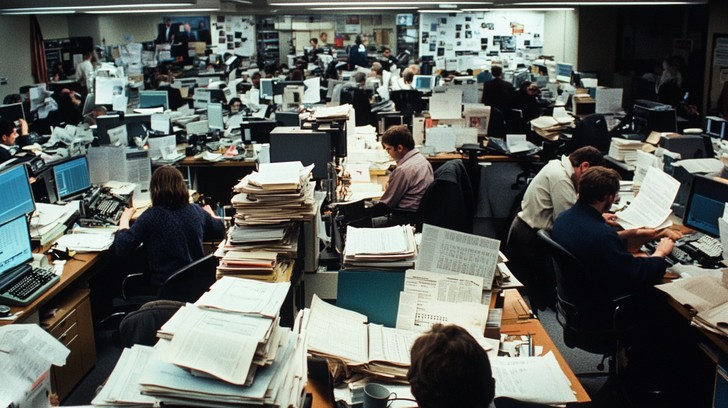
What stories are your newsroom covering today, and where are you publishing them?
If you can't answer that immediately, and if you'd need to check the rundown, then the CMS, then the social media scheduler, then ask someone what's going on with digital, you've got silos.
But don’t fret, you aren’t alone.
How we built these walls
Newsrooms weren't always like this. When television started, it was simpler: one channel, with everyone working toward the same deadline. Radio worked the same way. Print before that.
The tools matched the workflow: linear, sequential, everyone in the building working on the same thing at the same time.
Then the internet happened. Then social media. Then mobile. Then streaming. And suddenly, you aren’t just making a 6pm bulletin anymore – you are publishing 24/7 across a dozen platforms.
The problem? Your tools didn't evolve. They multiplied.
Most broadcasters tried to make their old systems stretch to cover digital. When that didn't work, they added new tools. A CMS for the website. A social media scheduler. A mobile app. Each platform has its own system. Each system created a silo.
Before you knew it, you had separate teams working in separate tools on separate deadlines, all covering the same stories but somehow... not together.
The "digital desk" problem
The TV team is working on a story for the evening bulletin. Interviews are done, footage is cut, script is written. It's all sitting in the broadcast system.
Meanwhile, the digital team is working in a completely different tool and has no idea any of that exists. So they're starting from scratch: finding their own sources, writing their own version, sourcing their own images.
Two teams. One newsroom. Same story. Zero collaboration. Maximum inefficiency.
Or what about this one: Social media sees something trending. They write a quick post, it gets great engagement. But the TV producer putting together the rundown has no visibility into what's already been published. So they assign someone to "check social and see if there's anything we should cover."
The information already exists in your organization. It's just trapped in a silo.
When platforms become identities
The worst part about silos isn't the tools, it's what they do to your teams.
When you organize around platforms instead of stories, people start identifying with their silo. You get "digital journalists" and "TV journalists" instead of just... journalists. Skillsets become specialized in ways that limit flexibility. Information sharing feels like cross-departmental coordination instead of just doing your job.
We've heard news directors say things like: "Our digital team is really good, but they don't understand how to work with broadcast deadlines." Or: "Our TV people produce great content, but they don't get social media."
Here's the thing: that's not a people problem. It's a structural problem. When your tools and workflows are siloed, your teams will be too.
The story everyone's working on but nobody owns
Breaking news is where this gets really painful.
Major story breaks. The reporter on the scene uploads video and sends back notes. But where do they go? Which system? Who sees them?
In a siloed newsroom, the answer is usually: "It depends." Depends on which tool they're using. Depends on who has access. Depends on whether someone remembers to tell the other teams.
So you get this:
- Digital publishes first because they can move fast, but with limited information
- TV is building their version separately, maybe with better footage the digital team never saw
- Social is doing their own thing entirely
- Someone's asking in Slack: "Do we have video of this yet?" – while it's been sitting in a system they can't access
One story. Multiple versions. Little to no coordination. And at the end of the day, nobody can easily answer: "What did we publish about this across all platforms?"
What "breaking down silos" actually means
It's not about getting everyone to be friends. It's about information architecture.
Story-centric workflows organize around the story, not the platform. One story container. One place where all the information, all the assets, all the versions live.
When breaking news hits, the reporter creates the story in Saga. Not "a TV story" or "a web story." Just the story. They add:
- What happened
- First video from their phone
- Interview notes
- Location
Immediately, everyone with access to that story sees it. The web team can publish a headline. Social can post an update. The TV producer can add it to the rundown. All working from the same verified information. All seeing what the others are doing.
No duplicate work. No information trapped in a system. No "wait, do we have video of this?"
When GB News built a newsroom from scratch
GB News had an advantage: they started from zero. No legacy systems to work around. No entrenched workflows. Just a question: "What's the smartest way to do this now?"
They chose story-centric from day one. Their entire operation runs in Saga – planning, web publishing, social, linear rundowns, everything.
The result is efficiency. A reporter can cover a story from pitch to publication across every platform without leaving one system. Saga's collaboration features bring teams together with real-time cross-collaboration on scripts, chat functions, integrated approval processes, and inline tagging to mention colleagues directly on stories.
Journalists can also add collaborators, gather resources from news feeds, share suggested media, and coordinate seamlessly using browser and mobile apps.
No silos. No handoffs. No information getting lost between teams.
This isn't about forcing everyone into one tool
Let's be clear: some specialization makes sense. The goal isn't to jam everything into one monolithic system. It's to have a central place where the story lives – the information, the assets, the workflow – that connects to the specialized tools you need.
Think of it like this: Saga is the newsroom. It's where planning happens, where collaboration happens, where you can see the full picture. But it connects to Mimir for video assets, to your graphics system, to your automation, to your CMS and social platforms.
The story stays central. The specialized tools plug in where needed.
Starting to tear down walls
You can't reorganize your entire newsroom overnight. But you can start.
Make one story fully transparent. Pick a major story everyone's covering. Make sure every team can see what every other team is doing with it. Use whatever tools you need to make that visibility happen. Learn what breaks, what's clunky, where information gets stuck.
Track duplicate work. For one week, note every time someone recreates work that already existed somewhere in your organization. How much time are you actually wasting?
Test story-centric structure on a small team. Don't try to change the whole newsroom at once. Pick a team, give them a story-centric tool, see what changes. Learn from that before scaling.
The technology exists to break down silos. The question is whether your organization is ready to work differently.