

From Deadline to real-time: How story-centric workflows changed news production
Remember when "making the 6pm bulletin" was the goal? When you could hold a story until your main broadcast, knowing your audience would tune in at a specific time to get their news?
Yeah. Those days are gone.
The death of the deadline
Here's the thing about modern news: there is no deadline anymore. There's just... now.
Your audience doesn't wait for the evening news. They're scrolling X or TikTok during their morning coffee. Checking Instagram between meetings. Getting push notifications while they're supposed to be working. And if you're not feeding them the story as it develops, someone else is.
But this is where it gets messy: most newsrooms are still built for that old world. You've got separate teams for digital, for broadcast, for social. Different tools. Different workflows. The digital team publishes something to the website. The TV team doesn't see it. Social is doing their own thing. Everyone's working on the same story, but somehow... not together.
Sound familiar?
When tools create silos instead of breaking them
We've talked to newsrooms running 40, 50, 60+ different tools. Some have even counted 70. It usually goes something like this: Legacy broadcast systems couldn't handle digital publishing. So someone found a CMS. Then a social media scheduler. Then a collaboration tool. Then another tool for mobile. Each one solving a specific problem, but creating a new silo.
The result? Journalists spend more time managing tools than reporting stories. Information gets trapped in systems. A reporter in the field uploads video that the web team never sees. The social team rewrites something that's already been fact-checked. Someone asks in Slack, "Wait, did we already publish this?"
The story as the starting point
Story-centric workflows flip this. Instead of organizing around platforms – "this is for TV," "this is for web" – you organize around the story itself.
One story. One source of truth. Multiple ways to tell it.
Here's what that looks like in practice:
Breaking news hits. A reporter creates the story in Saga. Not "a web story" or "a TV story." Just the story. They add the basics: what happened, where, who's involved. Upload the first video from their phone.
Immediately, everyone sees it. The web team grabs the info and gets a quick headline live. Social creates a post with the video. The TV producer adds it to the rundown for the next bulletin and gets an editor working on a package. All from the same story container. All accessing the same verified information and media.
The story evolves throughout the day. More details come in. The reporter updates the story. Those updates flow to everyone working on it. Web updates their article. Social posts a follow-up. The evening bulletin has the full context. No one's working from outdated information. There are no duplicated efforts.
At the end of the day, you can actually see what you published. Not scattered across six different platforms in five different tools. All the versions, all the updates, all tracked in one place.
What changes when everyone's on the same page
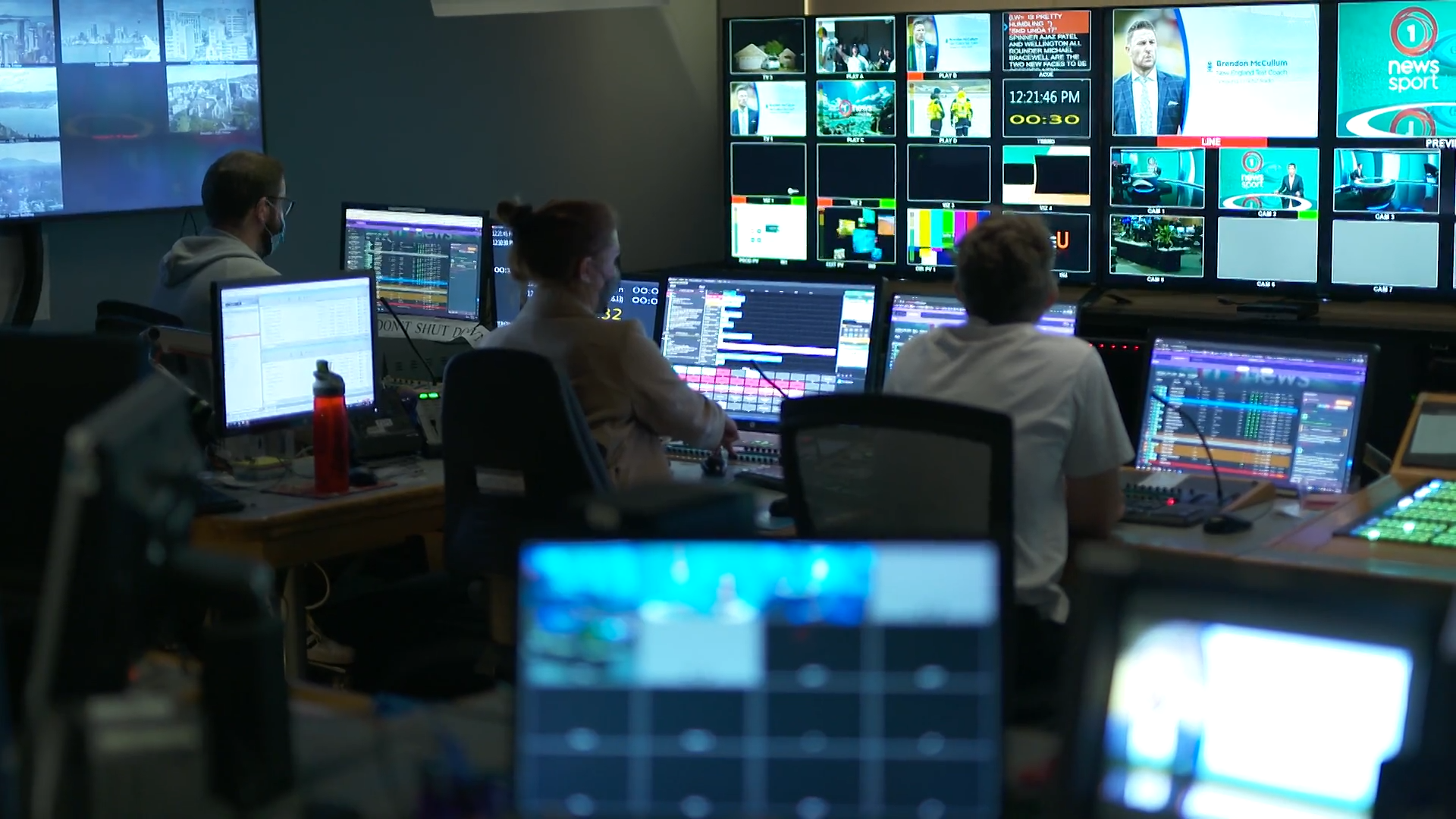
TVNZ moved to story-centric workflows with Saga. Their General Manager of Operations, put it this way: "We wanted to move away from working in silos with news for web, linear TV, social TV and more, in teams that could not collaborate efficiently and share resources."
Now? Journalists who were previously locked into platform-specific roles became story experts. A reporter covering a major story now shepherds it across all platforms, understanding the full picture instead of just one slice of it.
GB News built its entire operation story-centric from day one. Breaking news? They're publishing to web, social, and getting ready for linear – all from one system, all coordinated.
GB News Chief Operating Officer Marc Schipper said Saga, a first for Britain, was a “game changer” for the future of broadcast and digital news production:
“As a start-up, we need to innovate and do more with less, to punch above our weight against far larger and better-resourced news operations”. We have to be smart. GB News will be the only entirely cloud-based newsroom in the country. It means we’ll be lean but also that our journalists can deliver more features for viewers, with more immediacy and efficiency than ever.”
The real win: time back for journalism
Here's what we're really talking about: giving journalists time back.
Time spent copying and pasting between systems? Gone.
Time spent hunting for assets someone else already uploaded? Gone.
Time spent in meetings just to make sure everyone knows what everyone else is doing? Dramatically reduced.
That time goes back where it belongs: into reporting. Into verifying. Into telling the story better than every other outlet trying to capture your audiences attention.
Building for how news actually works now
The shift to story-centric isn't just a technology change. It's acknowledging reality: stories are living things that evolve across platforms throughout the day. Your tools should support that, not fight it.
Cloud-native systems like Saga are built for this. The reporter in the field has the same access as the producer in the newsroom. Updates happen in real-time. Collaboration isn't an afterthought – it's built into how the system works.
This isn't future-thinking anymore. Newsrooms like RTL Netherlands, TVNZ, GB News, TV 2 FYN, blinx – they're already working this way. The question isn't whether story-centric makes sense. It's whether you can afford to keep working the old way.
Want to see how story-centric workflows could work in your newsroom?